


Nearly 60% of team-based players say poor voice clarity cost them a match last year — a sharp reminder that clear comms can change outcomes.
We tested flagship sets like the Astro A50 X and compact options such as the Razer Barracuda X to see how microphones, platform support, and daily comfort stack up.
Our goal is practical: show which models give the cleanest voice, reliable connectivity, and sensible trade-offs in weight, battery, and price.
We focus on microphone first, then on audio quality, driver tech, and useful features like simultaneous 2.4 GHz plus Bluetooth or HDMI base stations for console/PC hubs.
Below we preview a wireless pick, a wired fidelity favorite, an open-back stage leader, and a smart budget wireless option so readers can narrow choices fast.
Key Takeaways
- We prioritize mic clarity and platform flexibility for team play and calls.
- Wireless convenience matters, but wired still wins for zero latency.
- Look for simultaneous 2.4 GHz + Bluetooth or an HDMI base station for multi-device setups.
- Driver type affects bass and detail — graphene and planar give different sound signatures.
- Weight, battery life, and app EQ are crucial for daily comfort and tuning.
Why our 2025 picks matter right now for U.S. gamers
We chose models that solve real, everyday problems: clearer voice pickup, simpler multi-device setups, and longer stretches between charges.
Microphone clarity finally moves from marketing copy to measurable gains. Recent releases deliver markedly improved intelligibility, which helps in tight team callouts and remote work chats.
Connectivity now matters as much as sound. A few 2025 sets offer dual-mode dongles or simultaneous 2.4 GHz and Bluetooth so players can mix game chat and phone audio without swapping adapters.
- We value multiplatform support for Xbox Series X|S, PS5, PC, Switch, and phones.
- Quality-of-life upgrades—USB-C charging, app EQ saved to device, and long battery life—reduce friction.
- We also weigh price and availability: some open-back options sound great but can be hard to find.
Our list centers on gear that improves comms, matches common living-room setups, and gives clear trade-offs between wired fidelity and wireless convenience.
How we evaluate gaming headsets and microphones
We prioritize the microphone first. We record the same voice sample in three rooms: quiet, office-like, and reverberant. That reveals differences in intelligibility, noise suppression, and tone that marketing specs hide.
Next, we pair those vocal demos with everyday checks. We test long-session comfort, clamp force, heat build-up on pleather versus velour pads, and weight balance to spot pressure hotspots.
Mic-first testing across ideal, office, and reverberant spaces
Real voice matters: we follow methods like SoundGuys’ demos and compare frequency response data where available, such as BadIntent’s miniDSP EARS results. This shows how tuning and pad choice shape midrange and presence.
Sound, comfort, battery, and multi-platform versatility
We evaluate audio imaging for competitive play, midrange clarity for squad calls, and bass for cinematic moments. Battery life is timed in real use and we note USB-C and fast-charge behavior.
- Latency checks across wired, 2.4 GHz, and Bluetooth to explain gameplay trade-offs.
- Platform tests on Xbox, PS5, PC, Switch, and phones to verify connectivity and chat mixing.
- Software audits: app EQ presets, on-device EQ saving (like G Pro X 2), and mic processing tools.
| Test area | What we measure | Why it matters |
|---|---|---|
| Microphone | Intelligibility, noise suppression, tone | Clear voice cuts missed callouts and stream audio issues |
| Comfort & Build | Pad material, clamp, weight, durability | Comfort affects play time and long-term value |
| Connectivity | Wired vs 2.4 GHz vs Bluetooth latency and reliability | Sync and dropouts change competitive performance |
| Software & Features | EQ, on-device saves, mic processing | Tuning and presets shape real-world quality |
Editor’s Choice: Astro A50 X for feature-rich wireless and elite mic
We pick the Astro A50 X when a single hub matters more than saving a few cables. The Base Station connects Xbox Series S|X, PS5, and PC at once and doubles as an HDMI switcher for instant console swapping.
Connectivity gets real here: simultaneous 2.4 ghz wireless and Bluetooth lets you mix game audio and phone calls. The station also exposes full EQ and a game/chat mixer on PS5, Xbox, and PC—rare console-side control that improves voice balance.
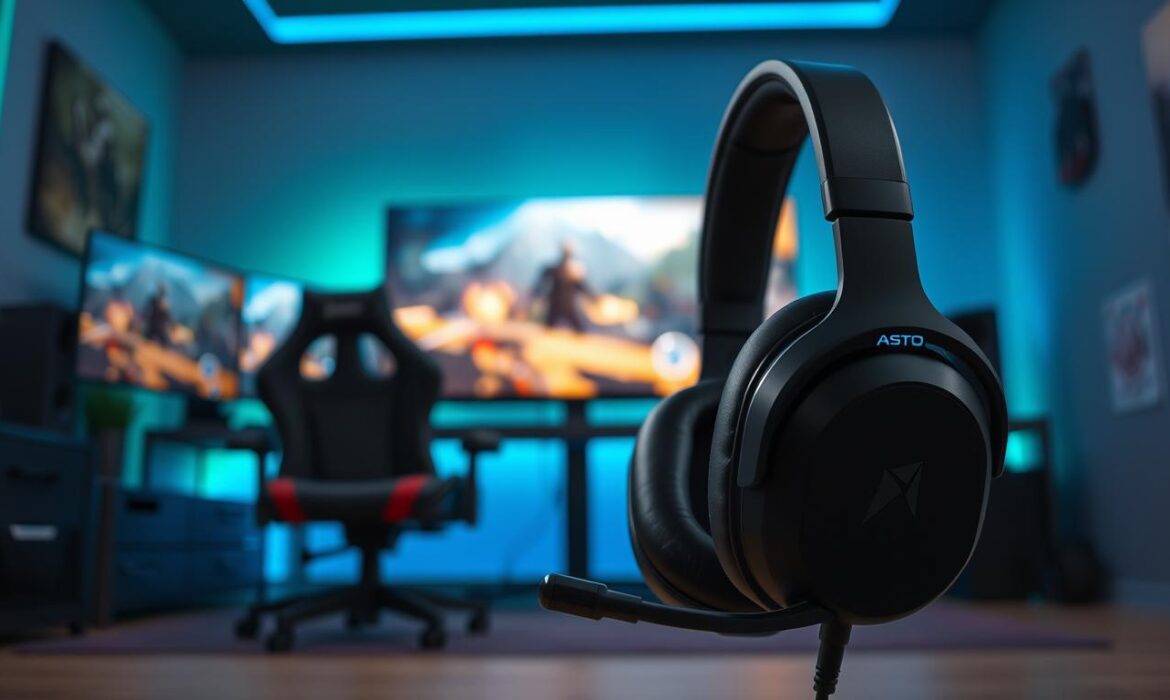
Best-in-class boom mic clarity with on-headset EQ control
The boom microphone is among the clearest we’ve tested. On-headset EQ plus app presets push presence and natural tone so voice pickup stays intelligible during noisy matches.
Graphene drivers: powerful bass without losing detail
Astro uses 40 mm graphene drivers that deliver strong bass while keeping mids open. Explosions feel full, yet footsteps and chatter remain distinct—helpful for both immersion and competitive play.
Who it’s for: cross-platform players who want a true hub
We recommend this headset to players who want fewer dongles and one base station for consoles and PC. Note the weight (~363 g) and the requirement that the unit operates only when the Base Station is active.
- Perks: HDMI switching, console EQ, simultaneous 2.4 ghz wireless + Bluetooth.
- Trade-offs: heavier on-head feel, Bluetooth range tied to base placement, higher price than trimmed variants.
- Pro tip: If HDMI or PS5 chat mixing is unnecessary, the A50 Gen 5 keeps much of the audio and microphone quality for less money.
Best microphone quality: Razer BlackShark V2 Pro (2023)
When voice clarity is the priority, we found a model that consistently delivers natural pickup and low room noise. The razer blackshark V2 Pro stands out for everyday comms and remote work calls.
Detachable boom mic that stays clear in noisy rooms
The detachable microphone records a focused midrange that keeps speech intelligible. It reduces ambient pickup so teammates and coworkers hear you without heavy processing.
Long battery life, lightweight comfort, and modern USB-C
Battery life exceeds 55 hours in our testing, and USB-C charging makes top-ups easy. Plush memory foam pads keep the headset comfortable during long sessions.
Note on V3 Pro mic differences and platform support
SoundGuys notes the V3 Pro’s mic sounds more muffled than the V2 Pro despite added features. The V2 Pro supports Bluetooth and USB-C, but lacks native Xbox compatibility—confirm platform needs before buying.
“The V2 Pro’s detachable boom is clear and natural, minimizing background noise.”
- Why we pick it: reliable vocal timbre for team play and calls.
- Perks: long battery, lightweight fit, simple connectivity.
- Caveat: Xbox users will need alternatives due to limited connectivity.
For a direct look, see the Razer BlackShark V2 Pro page for specs and price.
Best wired gaming: Beyerdynamic MMX 300 Pro precision and comfort
We recommend the MMX 300 Pro when a direct signal path and long-session comfort matter most. Its wired gaming design avoids wireless latency and keeps audio timing exact for competitive play.
Velour pads, solid build, and natural mids for voice clarity
The plush velour pads and padded headband make long sessions comfortable. Replaceable pads extend lifespan and keep fit consistent over years.
Midrange response stays natural, so voices sound clear without heavy EQ. The microphone provides stable, focused pickup that works well for scrims and streamed matches.
Why wired still wins for pure fidelity and zero latency
Wired connectivity via 3.5 mm means no batteries, no pairing, and universal compatibility. The direct analog path preserves transient response and image precision, helping shooters place shots by sound.
- Build quality: durable forks and metal parts hold up to daily use.
- Sound signature: tight bass and coherent imaging keep mids clear.
- Simplicity: no app bells and whistles — plug in and focus.
“Audiophile-grade sound and a dependable mic make the MMX 300 Pro a workhorse for players who want fidelity over frills.”
Open-back immersion: Drop + EPOS PC38X with standout mic
We like the PC38X for how its open-back design expands the stage and aids spatial awareness. That wider image makes it easier to locate opponents in fast-paced matches.
Wide stage and accurate imaging for competitive play
Soundstage is roomy, so footsteps and distant cues sit apart in the mix. The midrange response stays clear, keeping voice chat and in-game dialogue distinct.
Clear voice pickup from a fixed boom
The non-detachable boom records consistently, with focused presence that cuts through noisy mixes. It’s wired-only, so latency and battery concerns do not apply.
- Microfiber and velour pads offer comfort and airflow for long sessions.
- Firm clamp provides a stable seal but may need a short break-in.
- Lightweight build helps fatigue, though some report headband wear and a volume wheel that won’t fully mute.
“If you find one new, it’s a superb value for open-back fans.”
| Feature | How it helps | Notes |
|---|---|---|
| Open-back design | Improves spatial cues and imaging | Better for multiplayer FPS, not private listening |
| Non-detachable boom | Consistent voice clarity | Reliable pickup; no spare mic option |
| Pads (microfiber/velour) | Comfort and breathability | Velour breathes more during long games |
| Wired connection | Zero latency and simple setup | Appeals to competitive players; no wireless |
Best for any and all platforms: SteelSeries Arctis Nova 5X
When platform hopping is routine, a quick-switch dongle and clear voice pickup make daily use easier. The Arctis Nova 5X uses a USB dongle that flips modes between Xbox, PS5, and PC on the fly via 2.4 ghz.
Smart USB dongle switching for Xbox, PS5, PC, and more
We recommend the Nova 5X for households that share systems. The dongle handles wireless pairing and keeps latency low compared to Bluetooth.
Retractable mic and app EQ presets for over 100 games
The retractable microphone stays clear across typical rooms and tucks away for travel. SteelSeries’ app provides 100+ game-specific EQ presets so you can pick tuned audio fast.
- Battery: about 60 hours per charge for long stretches of play.
- Comfort: suspension band and breathable pads reduce heat on long sessions.
- Setup: simple pairing, no bulky docks or complex software stacks.
“A solid cross-platform pick for people who need simple, reliable connectivity and clear voice pickup.”
For availability and specs, see the Arctis Nova 5X on Amazon.
Best budget wireless pick: Razer Barracuda X (2022)
For players on a budget, a compact wireless option can hit the right mix of voice clarity and long runtime.
Razer’s Barracuda X (2022) bundles 2.4 ghz wireless, Bluetooth 5.2, and a wired mode into a light package that costs under $100. We like that it delivers low-latency dongle play and easy phone pairing for on-the-go audio.
2.4 GHz wireless, Bluetooth 5.2, and strong battery life
The unit reaches nearly 60 hours of battery life on a single charge, which cuts down on topping up during long sessions. That runtime is rare at this price and helps casual players avoid frequent charging.
Lightweight comfort and a clear detachable mic under $100
We found the ~250 g weight and soft pads very comfortable for binge watching or long matches. The detachable microphone captures clear voice for team chat and work calls, punching above its price class.
- Audio: slightly boosted bass but crisp mids for footsteps and dialogue.
- Connectivity: dongle-based low latency plus Bluetooth convenience.
- Price point: an excellent starter option that feels complete for daily use.
“For budget-conscious players, this is the most complete everyday wireless package we’ve tested in its class.”
Graphene drivers, pro software: Logitech G Pro X 2
We see the G Pro X 2 as a practical choice for players who need flexible connections and consistent tuning across devices.
Tri-mode connectivity includes wired 3.5 mm, 2.4 ghz dongle, and Bluetooth. That makes it easy to jump between PC, console, and phone without extra adapters.
Tri-mode connectivity and on-device EQ saving
The G Hub app lets us save EQ profiles to the device. That means your customized sound follows the headset to a console, no reconfiguring required.
Great sound, but microphone lags behind rivals
The graphene drivers deliver balanced audio suitable for mixed play and music. Comfort options include pleather and velour pads so you can pick seal or breathability.
- Perks: solid build quality and device-stored EQ.
- Trade-off: the mic sounds muffled and compressed in our tests, and Blue VO!CE only helps fully on PC.
- Note: at ~343 g the headset is heavier but offers long battery life.
For shoppers who prioritize vocal clarity, we point them toward alternatives like the Astro A50 X or Razer BlackShark V2 Pro. If you value sound and flexible connectivity over microphone excellence, the G Pro X 2 is a compelling, pro-grade option. See the Logitech G Pro X2 on Newegg for current listings.
Planar magnetic detail monster: Audeze Maxwell
We find the Maxwell a specialist pick for listeners chasing studio-level resolution. Its 90 mm planar magnetic drivers deliver unmatched detail from highs through deep sub-bass. The result is a revealing soundstage that exposes mix elements other drivers hide.
Driver and presentation
The huge planar drivers produce precise transients and extended low end. Footsteps, ambience, and subtle layer detail come through with pro-grade clarity. That precision makes this headset a reference tool rather than a neutral daily driver.
Weight and tonal trade-offs
The spring steel build feels premium, but the unit is heavy—about 513 g with the mic. Long sessions can cause fatigue; we suggest posture breaks or alternating lighter headphones for marathon play.
The midrange can sound shouty or slightly artificial on some tracks. EQ tweaking tames this region and brings out natural voice tone.
- Integrated on-ear mics help mobile use when you don’t want the boom.
- Connectivity covers 2.4 GHz, Bluetooth, and 3.5 mm for Xbox, PS5, and PC.
- The mic is solid but the Maxwell shines for driver quality and sound detail.
“Audeze’s Maxwell is for audio purists who accept weight and midrange quirks in exchange for reference-level resolution.”
| Attribute | How it helps | Notes |
|---|---|---|
| 90 mm planar drivers | High resolution and deep sub-bass | Reveals mix details; reference listening |
| Spring steel build | Durability and premium feel | Adds weight; robust construction |
| Connectivity | Flexible platform use | 2.4 GHz, Bluetooth, 3.5 mm — Xbox/PS5/PC |
| Weight (~513 g) | Stable seal and large pads | Can cause fatigue over long sessions |
ANC and app control standout: AceZone A-Spire
We find the AceZone A-Spire notable for pairing legit active noise cancellation and broad connectivity in one comfort-focused package.
Legit active noise cancellation plus tri-mode connectivity
A-Spire supports 2.4 ghz wireless, Bluetooth, and 3.5 mm wired modes. That means low-latency dongle play, phone pairing, or a wired fallback when you need universal compatibility.
Phone app EQ and travel-ready comfort
The companion app gives quick EQ presets and A/B tweaks mid-session, so you can tune audio on the fly. At ~289 g it stays light for an ANC-capable device, and the included case helps carry and store it safely.
Microphone performance is solid for team chat, though it doesn’t quite match the absolute top performers. The launch price (~$370) places this model at a premium, which is the main adoption hurdle.
- Why pick it: real ANC for noisy flats or travel plus 2.4 ghz low-latency play.
- Notable features: app EQ, carrying case, comfort-forward design, and reliable connectivity.
- Consideration: premium price despite broad feature set.
“If ANC is a must alongside 2.4 GHz play, the A-Spire is a rare all-in-one worth shortlisting in 2025.”
HyperX Cloud III reality check: comfort king with caveats
The HyperX Cloud III stands out for how effortless it feels during marathon sessions. Soft pleather memory foam, a balanced clamp, and roughly 320 g weight make the headphones remarkably easy to forget. That comfort is the Cloud III’s core value.
Great mic and comfort, but bass and features trail leaders
We found the microphone rivals pricier models like the BlackShark V2 Pro and A50 X for clarity in chat. For team play and remote calls, voice response is consistently clear.
However, the audio lacks sub-bass and stays thin even after EQ tweaks. If deep low-end impact matters for story-driven titles, this design falls short.
The feature set is basic: the wired unit has no detachable cable and the wireless model omits Bluetooth. NGENUITY software offers limited tuning and there is no onboard EQ.
- Why pick it: unrivaled comfort and a strong microphone for everyday play.
- Caveat: weaker bass, stripped-back features, and the Cloud III S uses an inferior mic.
- Price note: often found near $99, which makes it a solid value when comfort and voice clarity lead priorities.
“A comfort-first choice for players who want to forget they’re wearing headphones.”
Best gaming headsets with mic: who should pick what
We split recommendations by use case so you can match gear to your session type—competitive, immersive, or broadcast work.
Esports and competitive FPS
For fast multiplayer play, we favor precise imaging, clear mids, and the lowest possible latency.
Wired gaming options like the MMX 300 Pro give zero-delay cues, while the Drop + EPOS PC38X offers open-back spatial clarity for locating enemies.
If you need wireless, a 2.4 GHz dongle such as the Nova 5X is the best low-latency choice.
Story-driven and cinematic
Single-player fans should pick gear that prioritizes deep bass, wide stage, and long comfort hours.
The Astro A50 X balances bass and detail, and the Audeze Maxwell delivers massive resolution for rich, cinematic sound.
Streamers and remote work
For broadcast calls, mic quality and natural tone matter most.
Razer BlackShark V2 Pro leads for microphone clarity while the A50 X can match it when tuned. Budget-minded communicators get clean call audio from the Barracuda X.
- Esports: MMX 300 Pro, PC38X, Nova 5X (low latency, imaging)
- Cinematic: A50 X, Maxwell, HyperX Cloud III (bass, comfort)
- Streaming/work: BlackShark V2 Pro, A50 X, Barracuda X (microphone focus)
| Use case | Top pick | Why it fits |
|---|---|---|
| Esports / FPS | MMX 300 Pro / PC38X | Zero latency or open-back imaging; neutral mids |
| Single-player / Cinematic | Astro A50 X / Audeze Maxwell | Strong bass, wide stage, sustained comfort |
| Streaming & remote work | Razer BlackShark V2 Pro | Broadcast-grade microphone and clear vocal tone |
| Budget / Multi-use | Barracuda X / Nova 5X | Affordable clear mic and flexible 2.4 GHz wireless |
Wired vs 2.4 GHz wireless vs Bluetooth connectivity
Latency and pairing behavior decide how a headset performs in tight online matches. We focus on three practical choices and how they affect voice, timing, and reliability.
Latency, reliability, and why 2.4 GHz wins for gaming
2.4 ghz USB dongles deliver the lowest practical wireless latency for console and PC play. SoundGuys notes dongle-based models are the standard for low-latency setups.
We find ghz wireless links reduce jitter and drops compared with Bluetooth in crowded RF environments. Some models (Astro A50 X) also mix 2.4 ghz wireless and Bluetooth for phone calls.
When wired TRS/USB still beats everything
Wired gaming keeps latency at near-zero and avoids charging or interference. TRS and USB links are the go-to choice for tournaments and troubleshooting.
Tip: use wired if you need absolute timing, universal compatibility, or long scrims without battery worries.
Using Bluetooth as a convenient secondary channel
Bluetooth is handy for calls and media, but its latency makes it less ideal for twitch shooters unless paired alongside 2.4 ghz. Tri-mode headsets may connect multiple ways but often won’t mix sources simultaneously.
“Use Bluetooth for convenience; use 2.4 ghz or wired for competitive response and stable voice chat.”
| Connection | Latency | Strengths | Notes |
|---|---|---|---|
| Wired (TRS/USB) | Lowest | Universal, no battery, stable | Best for tournaments and audio troubleshooting |
| 2.4 GHz dongle | Very low | Low-latency wireless, reliable | Preferred for console/PC competitive play |
| Bluetooth | Higher | Convenient, phone pairing | Good for calls/media; avoid for twitch shooters alone |
Microphone essentials every gamer should know
Clear voice pickup starts with knowing how polar patterns shape what your team hears. We cover practical placement, software shaping, and hardware choices so your voice is consistent during play.
Cardioid vs hypercardioid pickup and placement tips
Cardioid patterns reject rear noise and work well around keyboards. Hypercardioid narrows the front lobe for tighter focus but needs accurate aiming.
Place the boom about two to three fingers from the corner of your mouth and slightly off-axis to cut plosives. Keep a consistent angle and distance so tone and response stay stable as you move.
Software shaping: Blue VO!CE, app EQ, and Discord settings
Use noise gates, suppression, and a gentle low-cut in Discord to tame keyboard chatter. Blue VO!CE and companion app EQs can brighten or thicken thin microphone tone, though some features are PC-only.
Do a quick test recording in your usual room and tweak a presence boost around 3–5 kHz for intelligibility.
Detachable booms, integrated mics, and noise handling
Detachable booms usually beat integrated on-ear mics for clarity and noise rejection. Omnidirectional options can sound natural in quiet rooms but pick up more ambient noise in shared spaces.
Build and arm flexibility matter — choose a design that stays put under headset headband pressure and during intense gaming sessions to keep audio quality consistent.
Quick comparisons by use case and feature set
To help you choose fast, we matched each model to a clear use case and highlighted the biggest trade-offs. Below are concise notes so you can match features to how you play.
Overall wireless winner: Astro A50 X
Why it stands out: the Base Station acts as a true hub, offering simultaneous 2.4 ghz + Bluetooth, HDMI switching, and an elite boom microphone for clear team chat.
It is ideal for cross-platform living rooms where one dock must serve PS5, Xbox, and PC. The sound and bass are strong, but weight and price are trade-offs.
Top mic clarity for most people: Razer BlackShark V2 Pro (2023)
Why it stands out: a detachable boom that captures natural voice and long battery life (55+ hours) makes this a practical pick for calls and streams.
Note: it lacks native Xbox support, so confirm platform needs before buying.
Open-back accuracy on a budget: Drop + EPOS PC38X
Why it stands out: wired-only open-back design gives a wide stage and precise imaging that helps locate opponents by sound.
It offers great value if you can find stock, but expect no wireless features or dongles.
Cross-platform travel companion: SteelSeries Arctis Nova 5X
Why it stands out: a smart USB dongle that switches modes, a retractable microphone, and 100+ EQ presets make it handy for players who hop between systems.
Long battery and compact fit favor travel and shared households.
- Also consider: MMX 300 Pro for wired precision and comfort.
- Audeze Maxwell for cinematic planar detail if you accept weight and a higher price.
- Razer Barracuda X for budget wireless 2.4 ghz play under $100.
“Match a headset’s feature set to how you actually play — that saves money and improves long-term satisfaction.”
Conclusion
We wrap this guide by matching each pick to the problem it solves for modern players. Clear comms, low latency, and platform flexibility were the filters we used.
Our roundup highlights practical choices, from the Astro A50 X as the feature-rich wireless hub to the Razer BlackShark V2 Pro for top microphone clarity. Wired fidelity fans get the Beyerdynamic MMX 300 Pro and Drop + EPOS PC38X. The SteelSeries Arctis Nova 5X helps platform hoppers, while the Razer Barracuda X stays true as a budget wireless option.
For a broader comparison and model notes, see our linked guide to the best gaming headset list.